COMPOST FERTILIZER PROJECT
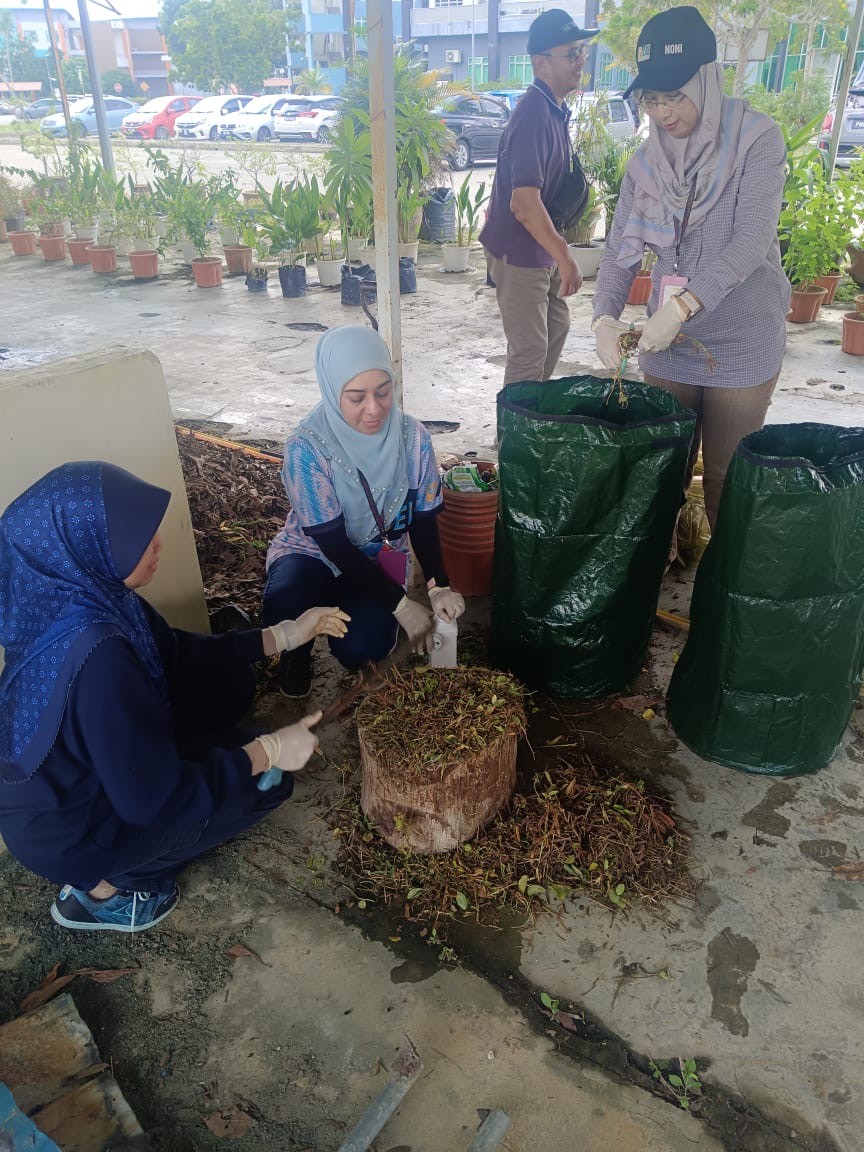
- This compost fertilizer production project uses microbes as a medium to accelerate the decomposition of organic materials, which is an environmentally friendly and effective method for recycling organic waste. The project is led by Associate Professor Dr. Nor Suhaila Yaacob, Director of the Selangor Bio-IT Institute, Centre of Excellence, along with her team and the support of staff from the Sports, Culture & Greening Centre. Microbes such as bacteria and fungi play a crucial role in this process as they break down organic materials like food waste, leaves, and other green materials into nutrient-rich compost.
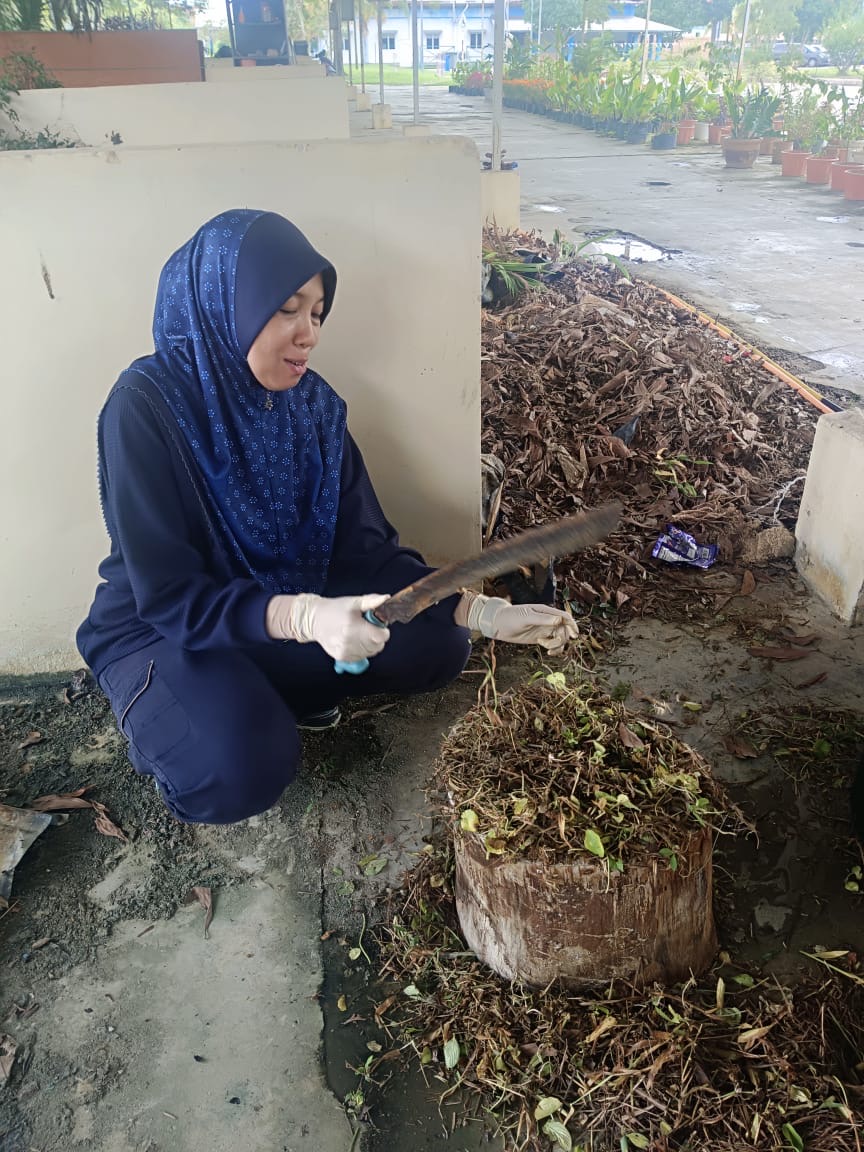
- The compost production process involves several stages. First, organic materials such as kitchen waste, garden waste, or agricultural waste are collected. Larger materials are cut into smaller pieces to expedite the decomposition process. Next, moisture and aeration need to be maintained, as microbes require these conditions to function well. Therefore, the compost needs to be turned regularly. During the decomposition by microbes, organic materials are broken down, generating heat that helps increase the temperature of the compost, thus killing unwanted pathogens and seeds.
- After several weeks or months, the organic materials will transform into compost that can be used to improve soil structure and nourish plants. The use of microbes in this project accelerates the decomposition process compared to the slower natural methods. In addition to helping reduce the amount of waste sent to landfills, this project also produces natural fertilizer that is rich in nutrients to enhance soil fertility.

Before